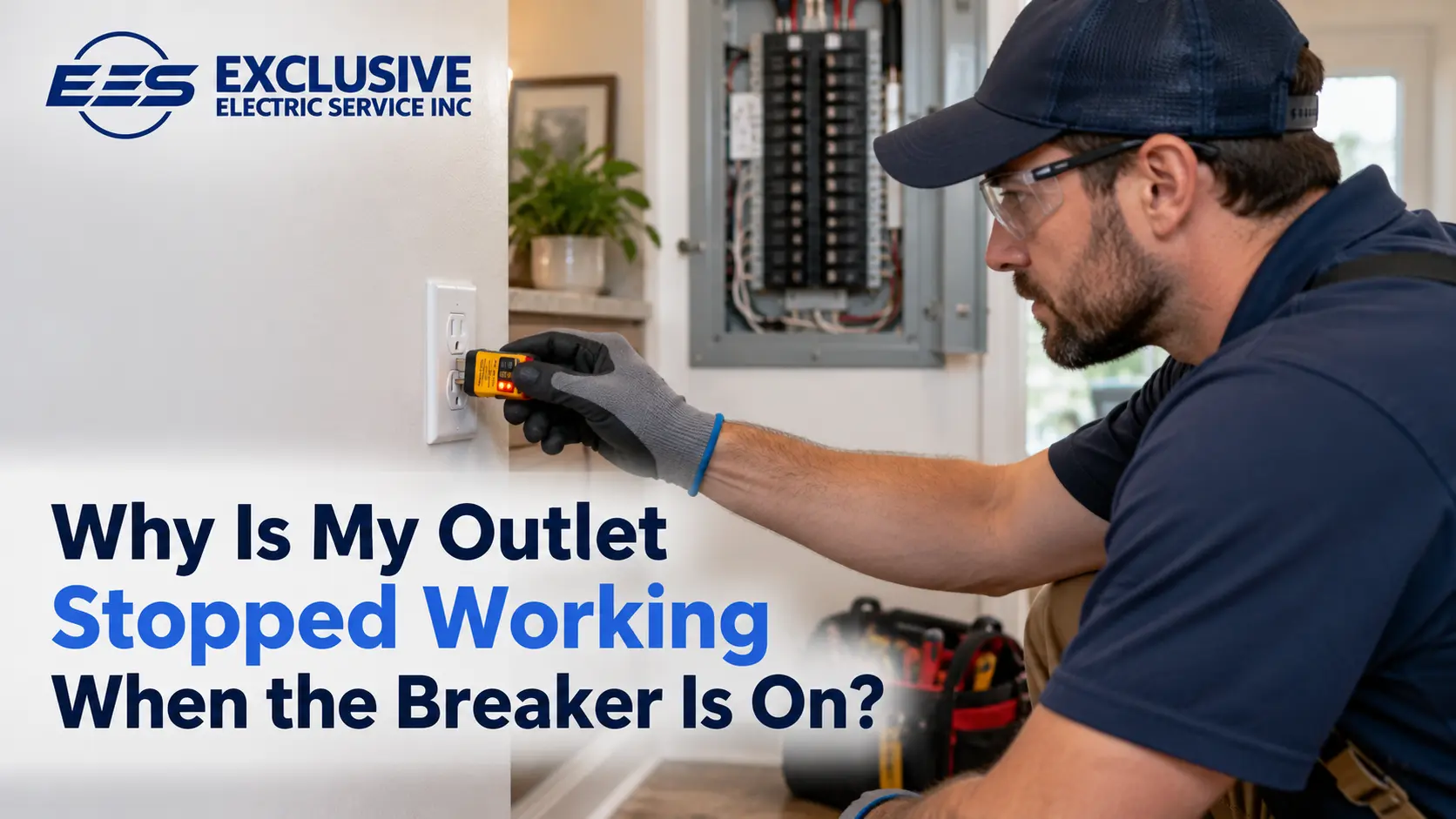
A phone charger stops working in the bedroom, or a kitchen appliance suddenly loses power. The first instinct is to check the electrical panel, but every breaker appears to be in the ON position. Other outlets and lights are working normally, making the problem even more confusing.
An outlet not working with the breaker not tripped does not always mean the receptacle itself has failed. A tripped GFCI, loose wiring connection, damaged outlet, or interrupted circuit can stop electricity from reaching a device without shutting off the breaker. Understanding these possibilities helps homeowners recognize what can be checked safely and when professional electrical troubleshooting is necessary.
Why an Outlet Can Lose Power Without Tripping the Breaker
Circuit breakers are designed to interrupt electricity when certain overloads or electrical faults occur. However, they do not detect every wiring problem. A loose connection, damaged receptacle, or disconnected conductor may interrupt the electrical path without producing enough current to trip a standard breaker.
A Tripped GFCI Somewhere Else in the Home
A ground fault circuit interrupter (GFCI) helps protect against electric shock by detecting an imbalance between outgoing and returning electrical current. GFCI protection is commonly used in kitchens, bathrooms, garages, and outdoor areas where moisture creates additional electrical hazards.
One GFCI can protect several downstream outlets. This means a receptacle in a garage or bathroom may lose power because a different GFCI has tripped. The circuit breaker can remain on while the protective device interrupts electricity to multiple outlets.
Loose Connections and Damaged Outlet Wiring
Electrical receptacles depend on secure wiring connections. Connections can deteriorate because of improper installation, aging components, or repeated heating and cooling. When a connection becomes loose, power may stop reaching the outlet or become intermittent.
A loose connection can also produce heat and electrical arcing. Warning signs include buzzing sounds, flickering lights, unusual warmth, or an outlet that works only occasionally. These symptoms require professional attention because the wiring may still be energized.
A Worn Receptacle or Open Neutral
Outlets experience wear as electrical plugs are repeatedly inserted and removed. Internal contacts may loosen, preventing reliable contact with connected devices. A worn receptacle might stop working completely or supply power intermittently.
Another possibility is an open neutral, which occurs when the neutral conductor loses its connection. Damaged hot conductors can also interrupt electricity. These problems may develop at the affected outlet or another point along the circuit. Identifying the exact fault requires electrical testing rather than simply replacing the receptacle.
An Overlooked Switch or Breaker Position
Some receptacles are controlled by wall switches, particularly in bedrooms and living rooms designed for plug-in lamps. A switch may control the entire outlet or only one half.
Circuit breakers can also appear to be on when they have actually tripped into an intermediate position. Although defective breakers are possible, they should not be assumed to be the cause without proper diagnosis.
What Should Homeowners Check Before Assuming an Outlet Is Broken?
The safest starting point is to rule out simple explanations without opening electrical boxes or touching internal components. These checks can help identify whether the problem involves a connected device, GFCI protection, or a larger electrical circuit.
- Test the connected appliance. If the outlet is dry, cool, and undamaged, unplug the device and try it in another working receptacle. If the appliance fails in both locations, the device itself may be responsible.
- Check nearby wall switches. Some outlets are connected to switches that control lamps or other equipment. Testing an accessible switch may reveal why the receptacle appears to have no power.
- Look for a tripped GFCI. Check accessible GFCI receptacles in bathrooms, kitchens, and garages. If a device is dry and undamaged, unplug connected equipment and follow the manufacturer’s reset instructions.
- Visually inspect the electrical panel. Look for a breaker in the tripped position. If it is safe to do so, follow the manufacturer’s reset instructions. Never remove the panel cover or touch internal wiring.
- Check other outlets. Determine whether the problem affects one receptacle or several. Note which rooms and devices have lost power so an electrician can investigate the affected circuit.
Important Safety Tip: A GFCI or circuit breaker that trips repeatedly should not be reset again and again. Repeated trips may indicate an unresolved electrical fault. If there is burning, smoke, moisture exposure, or visible damage, avoid touching the equipment and seek qualified assistance.
Warning Signs That Point to a More Serious Electrical Problem
A dead receptacle does not automatically indicate a dangerous condition. However, an outlet that loses electricity because of damaged connections or deteriorating components may present risks even when the breaker remains on.
The following symptoms deserve attention:
| Warning Sign | What It May Indicate |
| Burning smell near an outlet | Overheated wiring or insulation |
| Black marks or discoloration | Heat damage or electrical arcing |
| Buzzing or crackling noises | Loose or deteriorated connections |
| Outlet feels unusually warm | Overheating electrical components |
| Repeated GFCI trips | Ground fault or damaged equipment |
| Several outlets stop working | Shared circuit or upstream connection failure |
| Power comes and goes | Intermittent wiring or receptacle connection |
These symptoms do not identify the exact problem, but they help indicate when electrical inspection is necessary. A receptacle that produces smoke, sparks, or a burning smell should never be used. If smoke or fire is present, occupants should evacuate and contact emergency services.
Can a Dead Outlet Still Be Dangerous?
Yes. A receptacle may stop delivering electricity while parts of its wiring remain energized. For example, a disconnected neutral conductor can interrupt normal operation without removing voltage from the hot conductor.
Loose connections can also generate heat or arcing under certain conditions. For this reason, a nonworking outlet should never be treated as electrically safe simply because a plugged-in appliance does not turn on. Internal inspection and repair should be handled by qualified professionals.
Why One Dead Outlet May Affect Other Parts of the Home
Electrical outlets are not always wired independently. Multiple receptacles may share a branch circuit, and some are connected through common junctions or protective devices. A problem at one point can therefore interrupt electricity farther along the circuit.
For example, a failed upstream connection may leave several bedroom outlets without power while nearby ceiling lights remain operational. Similarly, a tripped GFCI in one location may disconnect additional protected receptacles elsewhere.
One Outlet vs. Multiple Outlets: What Is the Difference?
The number of affected outlets offers a useful clue, although it does not confirm the cause.
| Situation | Possible Explanation |
| One outlet has no power | Failed receptacle, switched outlet, or local connection problem |
| Several outlets in one room fail | Shared circuit connection or tripped protective device |
| Bathroom and garage outlets lose power | Possible upstream GFCI protection |
| Outlets and lights fail together | Branch circuit, breaker, or wiring problem |
| Power returns intermittently | Loose connection or deteriorating component |
A homeowner does not need to trace the wiring to identify these patterns. Simply documenting which outlets are affected can help an electrician decide where to begin testing.
What Makes Outlet Troubleshooting Different in South Florida?
Electrical outlets in Pompano Beach and surrounding South Florida communities may experience conditions that contribute to equipment deterioration. High humidity, frequent rainfall, and coastal environments can affect exposed or inadequately protected electrical components.
Outdoor receptacles deserve particular attention because rainwater, irrigation, and damaged weatherproof covers can allow moisture into electrical equipment. Corrosion may develop around terminals or connections, potentially affecting performance and safety.
Older properties can present additional concerns, including aging receptacles, previous wiring modifications, and electrical systems that have undergone multiple repairs. However, local weather conditions should not automatically be blamed for a dead outlet. Proper troubleshooting is still necessary to identify the actual cause.
When Does a Dead Outlet Need Professional Electrical Repair?
A professional inspection becomes appropriate when basic checks do not restore electricity or when the outlet displays signs of electrical damage. Repeated GFCI trips, intermittent power, burning odors, and multiple affected receptacles are particularly important reasons to have the circuit examined.
Electrical troubleshooting involves more than replacing a nonworking outlet. A qualified electrician may need to determine whether electricity is reaching the receptacle, whether the neutral conductor is properly connected, and whether a protective device or upstream connection is responsible.
How an Electrician Finds the Actual Problem
Depending on the symptoms, professional electrical troubleshooting may include:
- Measuring voltage at the affected receptacle
- Inspecting circuit breaker and GFCI operation
- Checking electrical connections for deterioration
- Testing circuit continuity when safely de-energized
- Examining damaged or overheated receptacles
- Identifying faulty connections along the branch circuit
These checks help distinguish a defective receptacle from a larger wiring issue. A failed outlet may require replacement, while a damaged connection elsewhere may need a different repair.
For persistent outlet failures, professional electrical repair services can help identify the underlying cause and determine the appropriate corrective work.
Simple Habits That Help Prevent Outlet Problems
Electrical outlets receive little attention until something stops working. However, everyday habits can reduce unnecessary wear and make developing faults easier to recognize.
Avoid forcing plugs into loose or damaged receptacles, and never use extension cords as permanent substitutes for properly installed outlets. Outdoor receptacles should have suitable weather-resistant components and protective covers. GFCI devices should also be tested according to manufacturer instructions.
Homeowners should pay attention to changes such as intermittent power, unusual warmth, and repeated circuit interruptions. An outlet that occasionally stops working may have an underlying connection problem rather than a temporary inconvenience.
Regular electrical inspections can be especially useful in older homes or properties with recurring electrical faults.
Frequently Asked Questions
Why is only one outlet not working while others have power?
A single outlet may fail because of worn internal contacts, a loose connection, a controlling wall switch, or an upstream wiring problem. The cause cannot be confirmed without checking the circuit.
Can a GFCI outlet stop working without tripping the breaker?
Yes. A GFCI operates independently of a standard circuit breaker and can interrupt electricity to its receptacle and other protected downstream outlets.
Should a dead electrical outlet be replaced immediately?
Not necessarily. A tripped GFCI, disconnected conductor, or damaged upstream connection may be responsible. Electrical testing helps determine whether the receptacle itself needs replacement.
Is it safe to use other outlets in the same room?
That depends on the underlying fault. If burning smells, arcing, overheating, or repeated power interruptions are present, the suspected circuit should not be used until it has been inspected.
Why does an outlet suddenly start working again?
Intermittent operation can result from loose contacts or deteriorating wiring connections. Even if power returns, the underlying electrical problem may remain and should be investigated.
Final Thoughts: Understand the Problem Before Replacing the Outlet
A dead electrical outlet can result from something as simple as a tripped GFCI or switched receptacle, but it may also indicate damaged wiring or an unsafe connection. The breaker remaining on does not confirm that the circuit is functioning correctly.
Safe checks can help rule out simple causes, while recurring failures and electrical warning signs call for professional diagnosis. Addressing the actual fault, rather than replacing components without testing, is the most reliable way to maintain a safe and dependable electrical system.